

How IMAX Is Becoming the Crown Jewel of Cinema
The Odyssey is a new showcase for IMAX, the visual technology that is gradually luring audiences back to movie theatres. But several dozen other films have already paved the way.
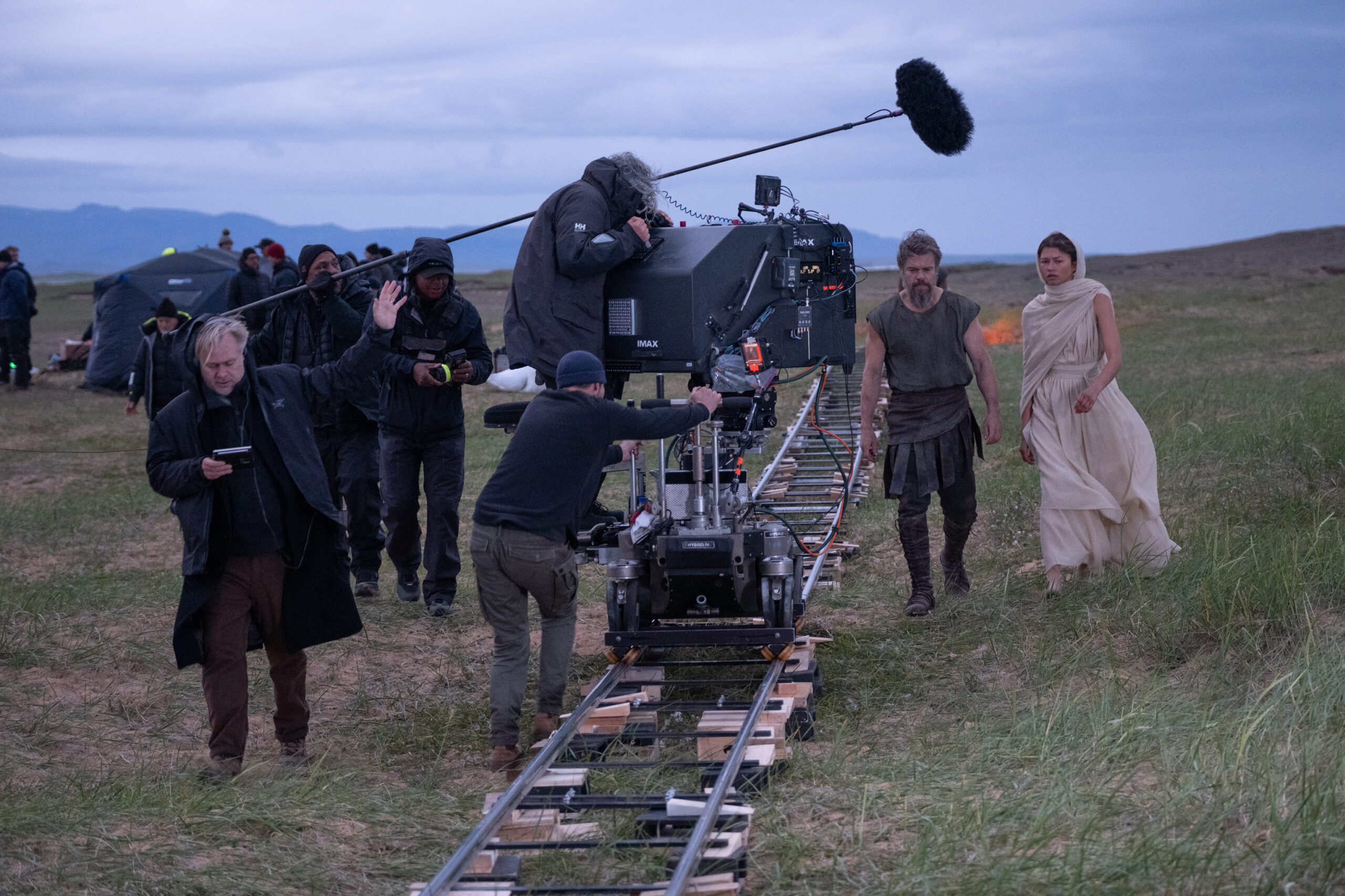
Even on his honeymoon in 1997, Christopher Nolan couldn’t stop talking about IMAX. Emma Thomas, the director’s wife and producer, recently told Time magazine how her husband has been obsessed with this advanced visual technology for some thirty years, experimenting with it early on: from a single test shot during the filming of The Prestige (2006) to the cinematic adaptation of the ancient Greek epic The Odyssey, which arrived in theatres this week as the very first feature film shot entirely in IMAX.
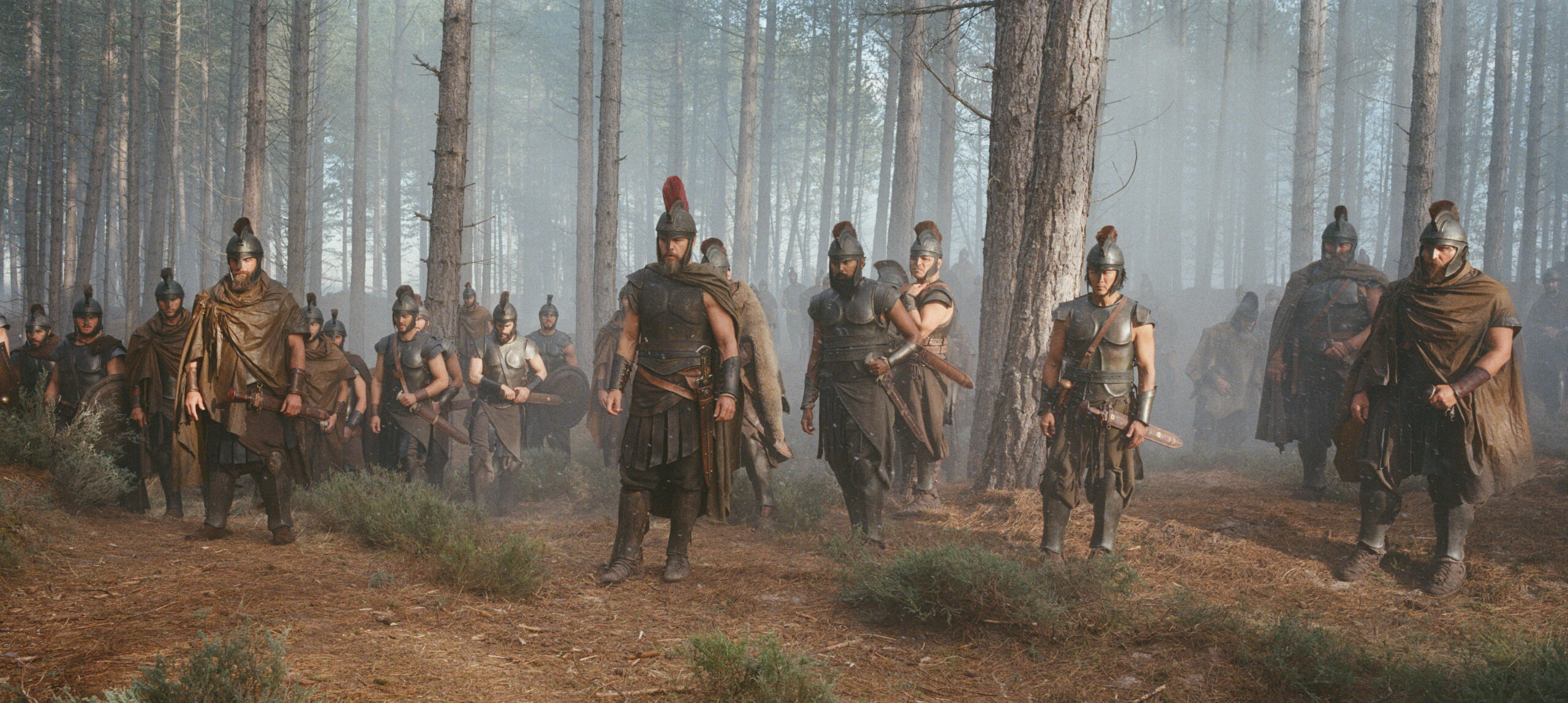
“The wonderful thing about cinema, and IMAX in particular, is that you can take an audience to a place of immersion, feeling close to events like storms, turbulent seas, high winds,” Nolan said in Time magazine. “You want the audience to be on the boat with them fearing the ocean, fearing the wrath of Poseidon, the way the characters do.”
In one Belgian cinema auditorium, audiences can experience those lashings of water, wind, magic, and clashing weapons in The Odyssey exactly as Christopher Nolan intended. The director made film history by becoming the first to shoot a full-length feature film entirely in IMAX, a superior imaging technology that has been around since the 1980s but never quite reached full primetime in movie theatres, partly due to the high costs and the sheer bulk of the camera and projection equipment. And to top it off, it was shot analog, on classic celluloid film.
That auditorium is the IMAX theatre at Kinepolis, located in their flagship complex on Boulevard du Centenaire / Eeuwfeestlaan in Brussels. The Belgian cinema giant is partially playing along with a calculated creative whim of Nolan and movie studio Universal, who had special analog prints of The Odyssey printed for around forty theatres worldwide. The sharpness is unprecedented: this IMAX 70mm reel delivered to this select group of cinemas boasts an 18K resolution, which is more than 20 times sharper than the image displayed on today’s higher-end 4K television sets.
It took brute manpower to bring that experience to moviegoers, says Kinepolis CEO Eddy Duquenne. “We had to reinforce the projection room floor. We had extra cooling systems installed. The film reel is seventeen kilometres long and weighs 260 kilograms. It took four people just to get it onto the projector.”
Witnessing Film History
Driving all the way from their northern French village to Brussels for an afternoon screening: Gabriel (22) and Camille (18) are more than willing to make the effort for the special analog IMAX screening of The Odyssey. “The director is Christopher Nolan,” says Gabriel. “One of the best directors in the world. And this is the biggest film of the year. You don’t really need any other reasons.”
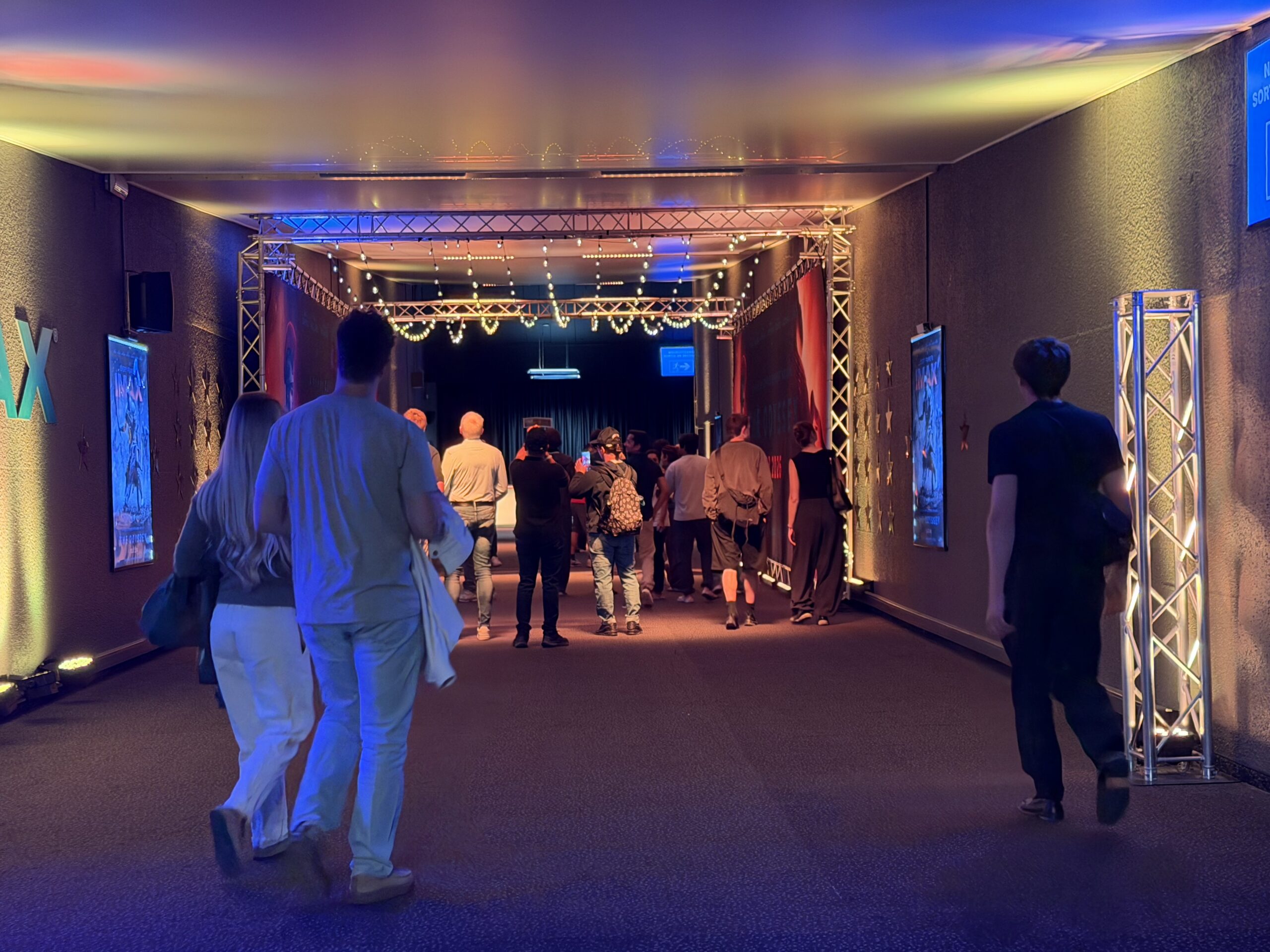
The wide, long hallway leading to the IMAX auditorium at Kinepolis Brussels feels like a heroic quest in itself. As if the building itself wants to signal: something special is about to happen here. That is clearly the anticipation among the crowd flocking in for the 1:30 PM screening. Selfies in front of the colossal canvas movie poster covering an entire wall from top to bottom. Animated conversations amongst moviegoers featuring titles like Interstellar and Dunkirk, earlier works from the British-American master filmmaker.
A lot of English can be heard amid the customary blend of Flemish and French that usually buzzes through these corridors. And plenty of northern Dutch accents too, as this auditorium is the only one in the Benelux showing The Odyssey in this format. Or even further afield: for the nearest cinema screening this version of the film, one would have to travel to London, Prague, or Montpellier. Long road trips are clearly worth this. “We are simply witnessing film history here,” says Willem (38), who drove all the way from near Tilburg. “That’s definitely worth a car ride.”
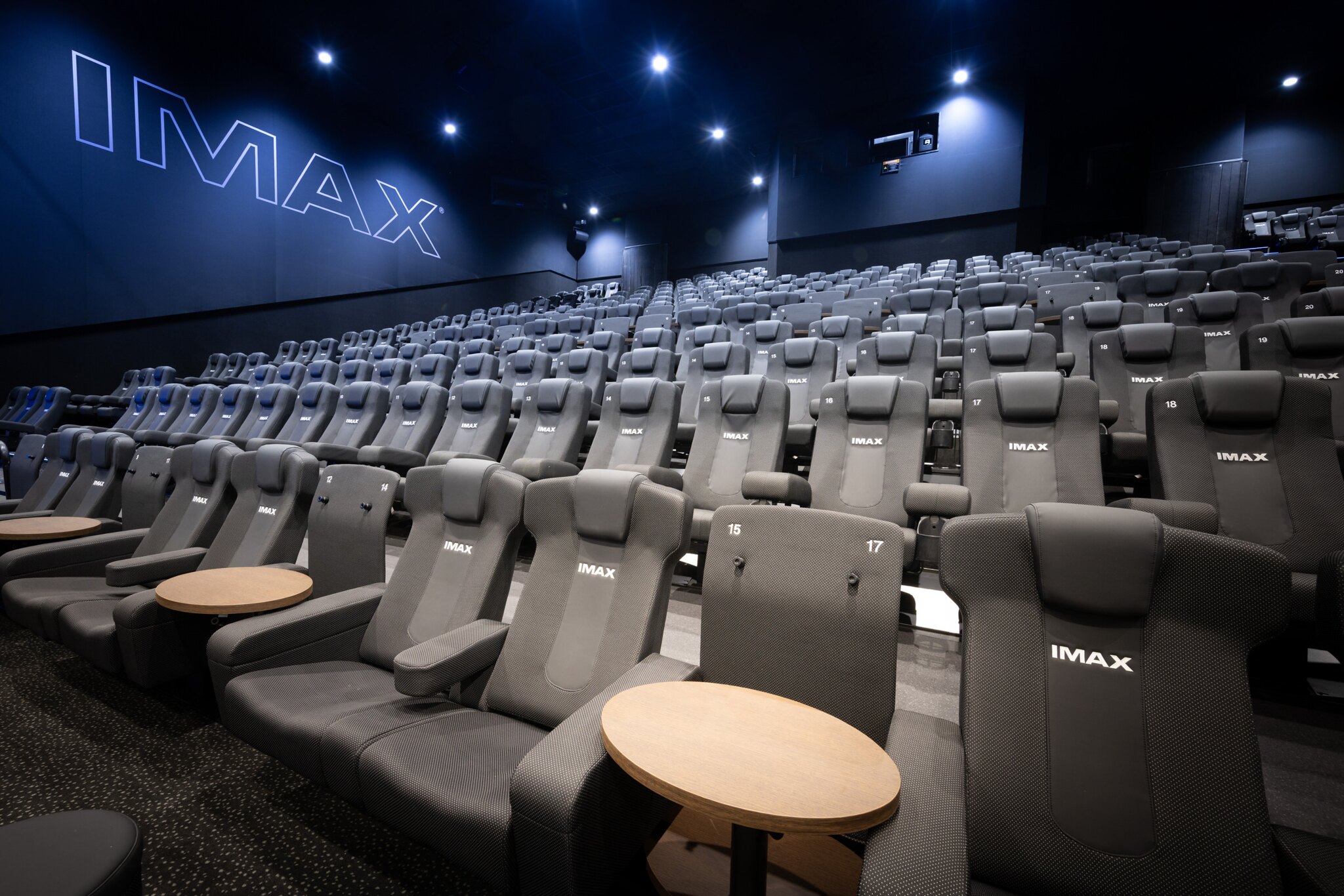
That projector has a story of its own. Kinepolis already had one back in 1988, when the then-modest cinema group pioneered the earliest IMAX films: short nature documentaries only, alongside expensive subsidized experiments such as Blue Planet (1990), featuring footage of Earth shot during US Space Shuttle missions. It wasn’t an overwhelming success, leading the IMAX auditorium to close between 2005 and 2016; it was only with the year-end blockbuster Rogue One: A Star Wars Story that the format returned, though by then equipped with a digital projector.
The Odyssey on 70mm IMAX is an analog format, which prompted a refurbished unit of that classic setup, pieced together with parts sourced by IMAX Corporation from various other projectors, to be brought back to the Brussels complex. All for the creative vision of a director who was given complete carte blanche by his studio.
Yet that is precisely why Tim (28) also drove all the way from the Belgian coast to Brussels for The Odyssey. He guards the shared haul from the cinema concession stand for his friends, who are making one last restroom run before embarking on the three-plus-hour journey. In front of him on the table sits an epic bucket of popcorn, flanked by bags of crisps, pick-and-mix sweets, and soft drinks. “Over thirty euros for a movie ticket—of course that’s a lot of money,” he says. “But Christopher Nolan is such a credible director with such an immense repertoire: we simply had to experience this film in the format he intended it for.”
IMAX on the Rise
The Kinepolis multiplexes in Antwerp, Hasselt, Liège, and Charleroi are also hosting IMAX screenings of The Odyssey,though those won’t require heavy lifting behind the scenes: they utilize ‘standard’ IMAX Laser projectors running a digital file rather than reels weighing hundreds of kilograms. Even so, the image quality in those auditoriums far exceeds that of a conventional cinema screen, which makes a huge difference to an increasing number of moviegoers.
IMAX is on the rise, as evidenced by the growing number of titles released in the format over recent years. Last year, 15 Hollywood films arrived in theatres this way, including F1: The Movie and Mission: Impossible – The Final Reckoning. “People want to experience something they can fall into, and IMAX was the key to creating that world,” said Ryan Coogler, director of the vampire film Sinners, which was also partially shot in IMAX.

This year, another 14 titles are joining the ranks, such as Dune: Part Three, Narnia, and Star Wars: The Mandalorian and Grogu. “I think IMAX informs everything,” director Jon Favreau said prior to the release of the latter. “Even though many people watch films downstream at home where it’s more the size of something that fits in your living room, when you’re in the theater, IMAX creates an immersive experience. It’s not just the size of the image, but the filmmakers that I look up to who’ve used it before have really leaned into the immersive quality of it. It takes up all of your peripheral vision. It’s a giant wall-sized screen. And so the action is still taking place at the center of the screen for the most part, but you feel like you’re inside that world. And for Star Wars, that’s crucial. As far as the character moments, I think you still have to treat everything as you would with any other narrative form of storytelling. But you know you always have the ability to draw the audience into an awe-inspiring environment that only IMAX and PLF large screen formats provide.”

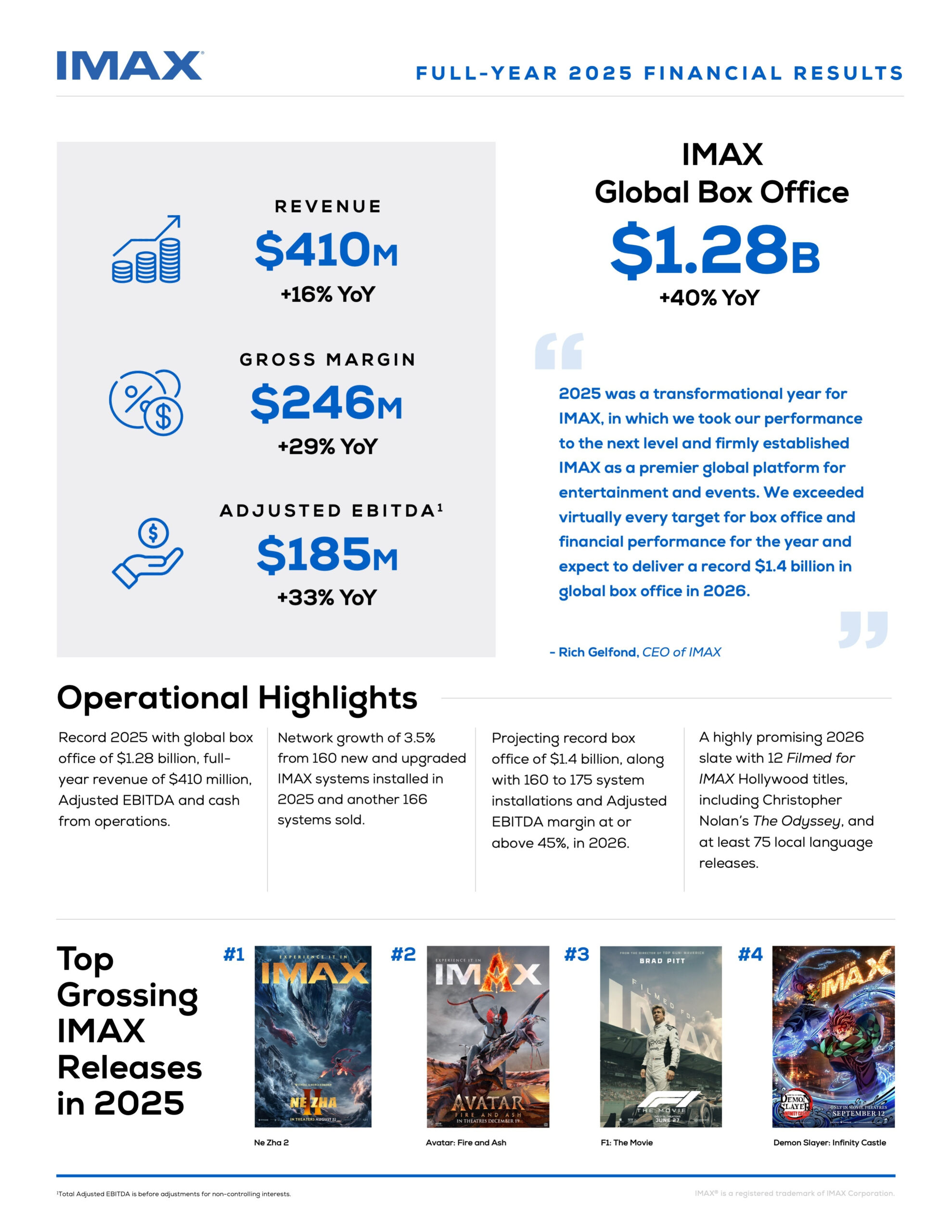
Last year, IMAX Corporation, the US-based technology provider, saw global box office ticket sales in IMAX theatres surge by 40 percent to $1.28 billion (€1.12 billion). Standard worldwide ticket sales also climbed, according to trade publication Deadline, but by just 12 percent. While a substantial portion of that gap is naturally due to the premium consumers pay for an IMAX ticket, the key takeaway is that they are clearly willing to pay that extra money. Last year was “a transformative year,” said CEO Rich Gelfond when announcing the figures in February. “IMAX has become increasingly essential for launching blockbusters, and we believe this is propelling us into a new era of evolution and growth.”
An Uphill Recovery
While the two pandemic years did not deal a fatal blow to the cinema industry, the sector is still navigating an uphill recovery. Last year, global box office revenue reached $33.5 billion (€29.3 billion). In 2019, that figure stood at $44 billion (€38.5 billion)—meaning the industry still needs to recover roughly a third of its business to return to pre-pandemic levels.
Many former moviegoers are still looking for a compelling reason to leave the comfort of their homes. Increasingly, they find it in IMAX, as Kinepolis has also observed. The superior visual technology and a screen more than five times taller turn a cinema visit back into an event worth planning for. “Cinemas are becoming more and more of an event business,” Duquenne notes. “Patrons expect ever-greater experiences and show a high willingness to pay for them. People are already accustomed to high picture quality at home. But I maintain that streaming is not our competitor. We simply know that audiences want something more when they go to the cinema. And that premiumization lies in immersive image quality. Of course, it remains an expensive technology, so we reserve IMAX auditoriums for theatres with a sufficiently large catchment area. It also works best for films with a dedicated fan base—audiences eagerly awaiting a release. When ‘their’ film comes out, they want to see it under the best possible conditions and are more than happy to travel further for it.”
Kinepolis is still treading carefully, reporting a slight dip in 2025 revenue (down 2.3 percent compared to 2024, to around €565 million) and attendance (30.7 million across 9 countries, just under 2 million fewer than the previous year). However, revenue per visitor rose by 2.5 percent to €4.18 per head. A modest gain, but attracting moviegoers to multiplexes in this changing landscape required substantial investment. Last year, Kinepolis poured roughly €20 million into opening auditoriums with next-generation projection and screen technologies—including IMAX, additional panoramic ScreenX theatres, and standard auditoriums upgraded with Laser Ultra projection from Belgian tech firm Barco.
“With IMAX, we operate under a revenue-share agreement,” says Duquenne. “We each cover part of the capital expenditure for new installations, but we also share a percentage of our ticket revenue. Keep in mind that 50 percent of every cinema ticket sold already goes to the film studio. The cut we remit to IMAX comes out of our remaining half, meaning we only make marginally more per ticket compared to a standard admission. However, our IMAX auditoriums boast higher occupancy rates, allowing us to attract more customers overall. What we take away from it right now is less critical than investing in the future.”

A Lot of Noise
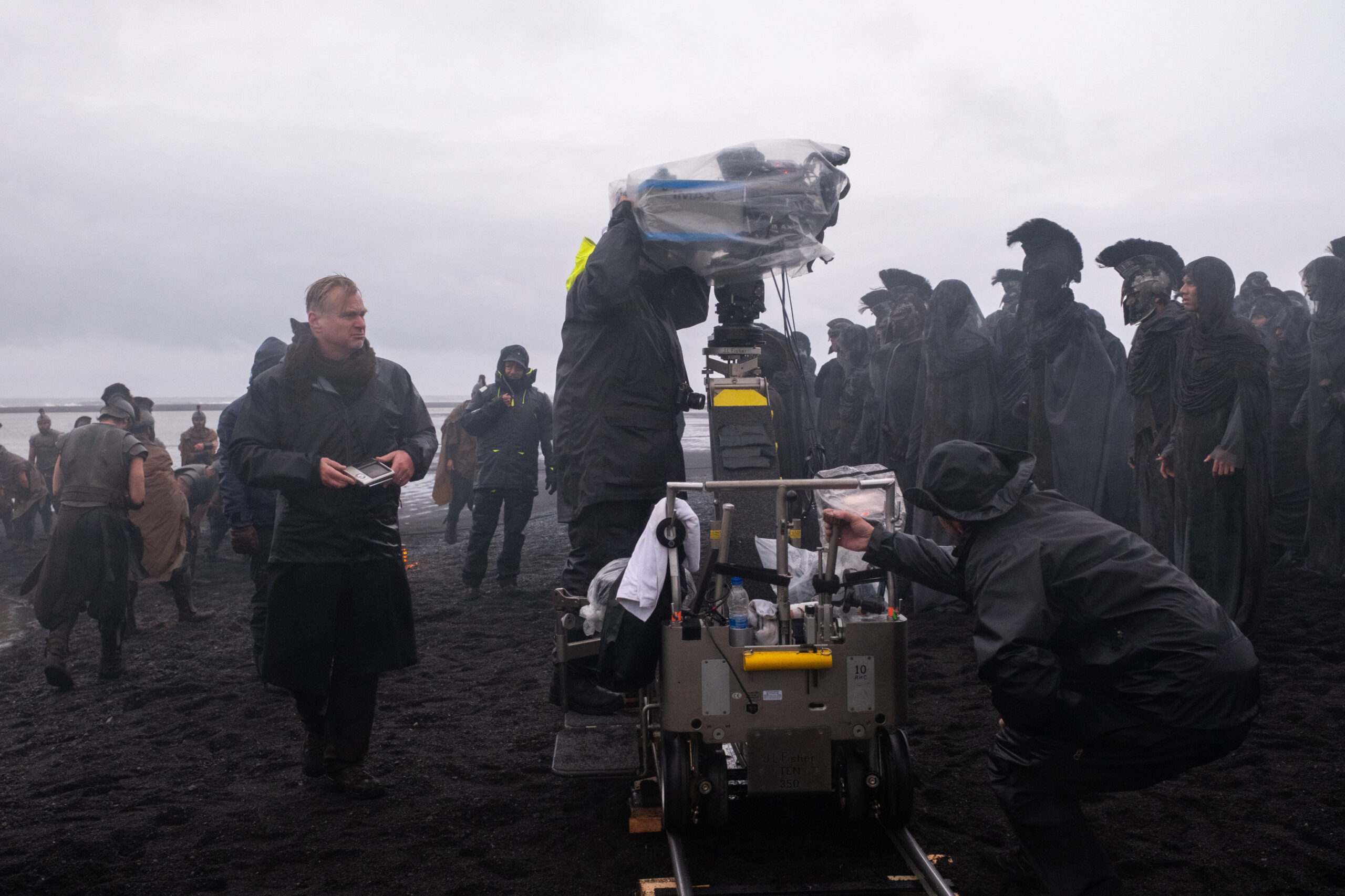
The only drawback for production crews is that IMAX cameras still generate a significant amount of noise during filming. Nolan worked closely with IMAX Corporation to design a specialized sound-dampening housing (‘The Blimp’). But for other pioneers, the noise was genuinely intrusive. Still, it can also be a matter of channeling it into the acting, as Sinners actress Li Jun Li pointed out:
“Ryan warned us about the sound the cameras make. I specifically remember, because my character’s entrance scene—where she steps from her grocery store across the street to Bo’s grocery store—was shot on IMAX. The sound actually helped me click right into the world, because there is nothing more magical about being in a film in the ‘30s, shooting film in a camera making so much noise. [laughs] So it really helped me, if anything.”

No Comments :